
I have been spending quite a bit of my extra free time (outside of work) in the area of trying to learn containers, devops, etc.. Within the last 12 months, I’ve taken several Kubernetes courses, Docker courses, Microservices, etc.. Although it has not been “paid experience”, I feel that I have broken the learning curve and could be qualified to be in a group at work using those technologies under the guidance of more experienced individuals fortunate enough to get into using those technologies on the job.
So even tho I took those courses with other authors (which were great courses), I recently noticed that Steven Grider had a course on Docker/Kubernetes too. So I knew I “had” to buy that course based on the React courses I bought where he taught. Those were such great courses that I knew I had to get this course because I wanted to hear how he would teach/explain Docker/Kubernetes. He is a natural born talent when it comes to teaching. He reads your mind and tends to answer a question you may have even before you have a chance to think about asking him the question.
https://www.udemy.com/docker-and-kubernetes-the-complete-guide/
I made a video of a review
About the course, it’s a very aggressive/ambitious course where he teaches you both Docker and Kubernetes. I highly recommend this course “even if you already know Docker or Kubernetes” as he throws in enough valuable “Grider”-isms to help you understand things better.
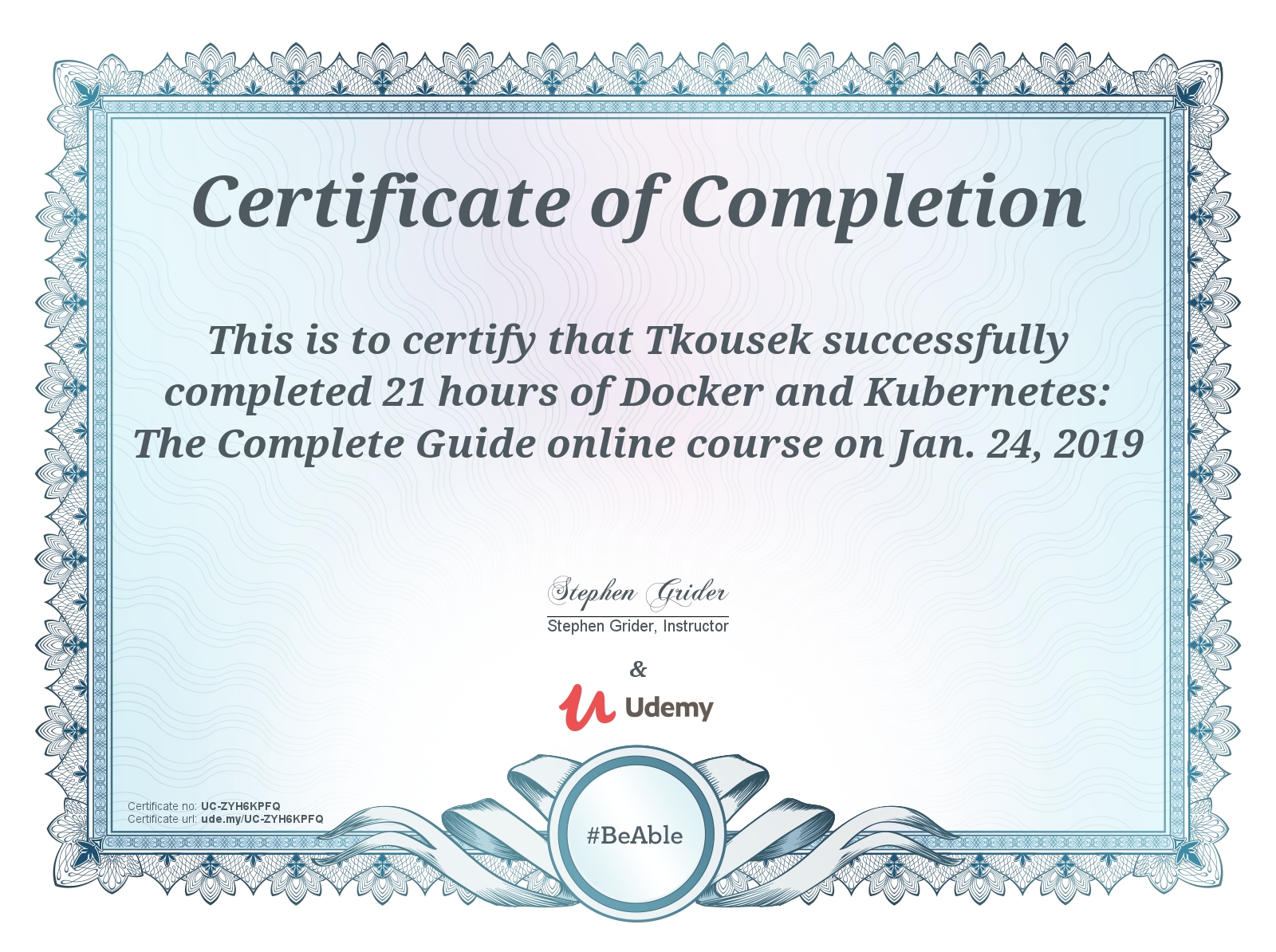
The course contains 21 hours of video. What that basically means is that if you are working full time and are a “learner of new things off hours”, you should consider planning for it to take a full month (outside of work) or even five weeks. For me, a 1 hour video is never “1 hour” for me to go thru. It’s usually a 2:1 or 3:1 ratio for me depending on the course. He also gives you the chance to learn some additional things along the way like:
– Using Travis CI for continuous integration
– Git (for those unfamiliar with it who maybe have been using TFS or some other version control system)
– Helm (for 3rd party administration)
– Setting up certificates to get HTTPS working
– Setting up/deploying a web application to Google Cloud.
This course will be a tremendous investment in your time but you will learn a lot if you take this course.
Highly recommended.
 St. Louis area developer.